Evidence before status
A programme or public-record conclusion follows a defined evidence scope; it does not precede it.
RMCA governance
Public confidence depends on disciplined preparation, independent challenge, controlled publication and visible correction—not volume or promotional status.
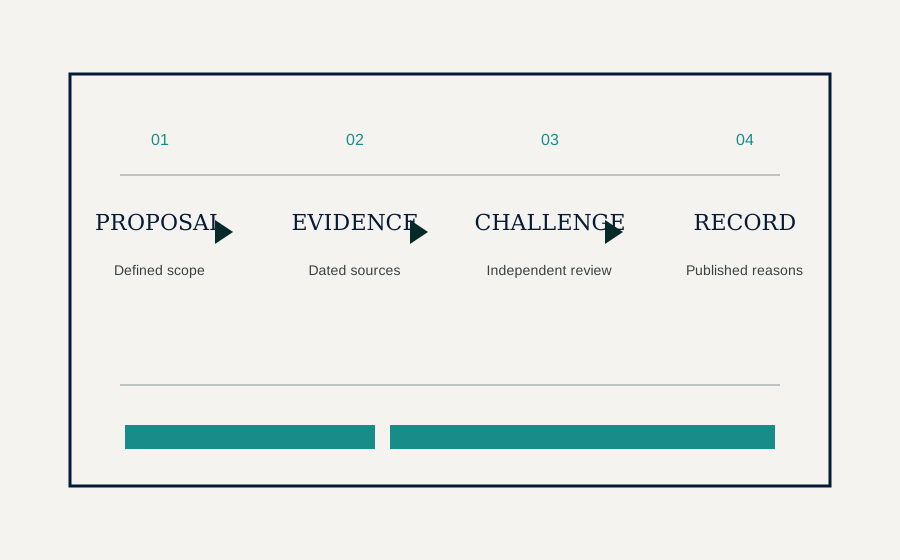
Decision architecture
Proposal, evidence, challenge, decision, publication and correction remain visible stages rather than one opaque outcome.
Governance principles
These principles apply across RMCA framework work, public records and programme operations, proportionate to the decision and publication risk.
A programme or public-record conclusion follows a defined evidence scope; it does not precede it.
Contributors, preparers and commercial interests do not control programme decisions.
Where proportionate, the person preparing an evidence file does not independently verify the same scope.
Identity, permission, protection, safeguarding and conduct evidence retain separate character and limitations.
Terms, fields and decision rules carry an identifiable version and change history.
Corrections are visible, reasoned and linked to the historic state rather than silently overwriting it.
Relevant interests are declared and managed; recusal applies where independence cannot otherwise be maintained.
Research, publication and programme decisions cannot be bought or shaped through sponsorship.
Accountability
RMCA preserves routes for factual correction, right of reply, complaints and conflict concerns. Publication controls must work before volume increases.